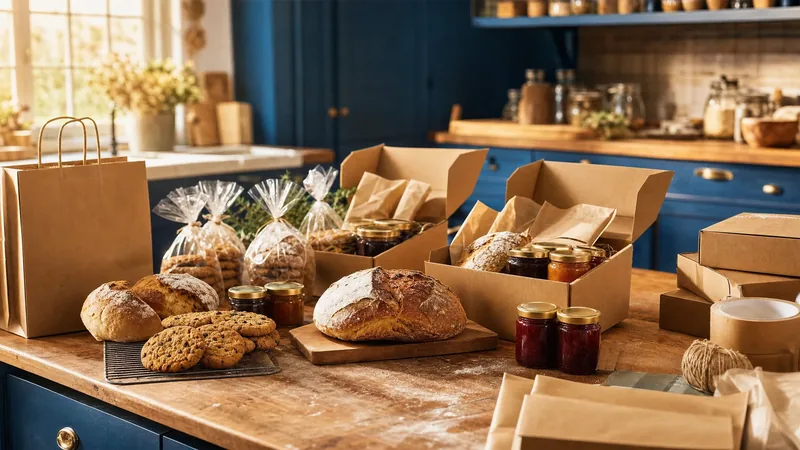
Utah Cottage Food Law: Selling Homemade Food Without a State Licence
Utah Cottage Food Law: Selling Homemade Food Without a State License
If you bake, cook, or preserve food at home and want to sell some of it, Utah gives you two routes. The first needs no state food registration. The second is a state registration with a UDAF inspection. Most home sellers can use the first route, but it limits where and how you sell, and it does not exempt you from city or county business licensing. This guide covers both paths, the labels you must print, and the approvals you still need to confirm.
Disclaimer: This is informational content, not legal or tax advice. Statutes, agency rules, and local ordinances change. Confirm current requirements with the Utah Department of Agriculture and Food (UDAF), your city or county, and the Utah State Tax Commission, and talk to an attorney or CPA about your specific situation.
The Short Answer
Utah does not issue a general “cottage food license.” Two state rules apply to home food sellers:
- The Home Consumption and Homemade Food Act (Utah Code 4-5a, enacted by HB 181 in 2018). If you meet its conditions, you are exempt from state, county, and city food licensing, permitting, certification, inspection, packaging, and labeling requirements. You do not register with the state for food.
- Cottage Food registration (Utah Code 4-5-9.5, rule R70-560). This is a separate, optional registration that involves a UDAF inspection. It allows a wider range of sales but limits the foods you can make.
Either way, the exemption does not remove your general business license obligation. The Act itself points back to business licensing requirements, so a city or county business license still applies.
Path 1: The Home Consumption Exemption
The exemption applies only when all three of these conditions are true:
- The food is made and sold in Utah.
- You sell it directly to an informed final consumer, for home consumption.
- The food is not one of the categories the statute excludes.
The Act bars UDAF from adopting rules that add limits beyond the statute. That protects the exemption, but it also means the statute itself is the rulebook, so read it before you rely on a summary, including this one.
Where and How You Can Sell
Sales must be in person, at a prearranged location, and made directly to the consumer. You cannot sell through stores, restaurants, or other resellers. Raw, unprocessed produce is the one exception to the no-reseller rule. You must also tell each buyer that the food is not inspected.
What Is Excluded
- Raw dairy and raw meat are excluded. The statute contains limited poultry and rabbit exceptions, so check the exact wording before you sell either product.
- Any sale for resale to a store, restaurant, or other business falls outside the exemption. Those sales belong to the Cottage Food registration, if your product qualifies.
Online Sales
UDAF’s page on the exemption does not address online sales. Do not assume an online order meets the in-person, prearranged-location rule. Ask UDAF in writing and get an answer before you sell online, including shipping or delivery arrangements.
Labels for Exempt Sales
Every product sold under the exemption needs a label that shows:
- Your name and address as the producer.
- A “Not for Resale” disclosure stating that the food is not inspected.
- Allergen information.
Confirm the exact disclosure wording with UDAF before you print labels, since a wrong label is the easiest mistake to make and the hardest to fix once you have sold product.
Path 2: Cottage Food Registration
The Cottage Food registration is the option for sellers who want to sell to stores or who need to sell beyond the exemption’s limits. It trades those broader sales channels for a state process with these requirements:
- A food handler permit.
- An application for registration with UDAF.
- A UDAF inspection.
- A nonrefundable fee. UDAF invoices this after you apply. The amount is not stated in this guide, so confirm it with UDAF before budgeting.
The registration is limited to shelf-stable, non-potentially-hazardous foods. Foods that need refrigeration or temperature control to stay safe, such as cream-filled bakery items or fresh sauces, are generally outside it. Ask UDAF to confirm each product before you apply.
Comparing the Two Paths
| Question | Home consumption exemption | Cottage Food registration |
|---|---|---|
| State food registration | Not required | Required (UDAF) |
| UDAF inspection | None | Yes |
| Foods allowed | Any food the statute does not exclude, with raw dairy and raw meat excluded (limited poultry and rabbit exceptions) | Shelf-stable, non-potentially-hazardous foods only |
| Who you can sell to | Final consumers, in person, at a prearranged location | Consumers, or stores for resale |
| Food-specific fee | None, but the city or county business license still applies | Nonrefundable fee invoiced by UDAF after you apply (confirm amount) |
| Online sales | Not addressed by UDAF; ask before selling | Confirm with UDAF |
The City or County Business License
Utah issues no statewide general business license. Once your business is registered with the state (if it needs to be), you still need a business license from the city or town where you are located. If you operate outside any city limits, the license comes from the county.
A city license does not transfer between cities. If you move, or if you plan to sell from a location in another city, get that city’s license. Ask the city about home-based business rules and fees, since neither is stated here. Your food exemption does not replace this step, and skipping it is the most common compliance gap for home sellers who otherwise follow the food rules.
Sales Tax
A seller with an established presence in Utah needs a Utah Sales Tax License from the Utah State Tax Commission. This is a tax registration, not a business license, and you apply through the Tax Commission’s TAP system at tap.tax.utah.gov. The Tax Commission’s main site is tax.utah.gov.
Utah’s state sales tax rate is 4.85 percent, and the state rate on grocery food is 1.75 percent. Combined state and local rates run from 6.35 to 10.05 percent depending on jurisdiction, and the combined grocery food rate is 3.0 percent. Do not assume that a baked good or preserved product takes the grocery rate. Whether each of your products is taxable, and at what rate, is a question for the Tax Commission. If you are a sole proprietor, your sales income passes through to your personal return, and Utah’s individual income tax rate is a flat 4.45 percent for tax years beginning on or after January 1, 2026.
Names and Entity Filings
These filings are registrations with the state Division of Corporations and Commercial Code. They do not replace your city or county business license or any food rule.
- Assumed name (DBA). If you sell under a name other than your own legal name, file an assumed name registration. It is filed with the state Division, not the county. The fee is $22 to register for a three-year term, and the renewal fee is shown in the portal at renewal. Details are at commerce.utah.gov.
- LLC. An LLC is formed by filing a Certificate of Organization, with a $59 filing fee, through the Utah Business Registration System at businessregistration.utah.gov. Most online filings are approved instantly. The yearly filing is the annual renewal, at $18, due on the anniversary of registration, with the window opening 60 days before that date. A late renewal costs $10. Utah has no separate LLC franchise tax.
Forming an LLC is worth discussing with an attorney if you carry liability risk, such as selling products that could cause harm. Forming one does not make the food legal to sell, and it does not replace the other steps in this guide.
Steps, in Order
- Decide whether the home consumption exemption or the Cottage Food registration fits your product and your buyers.
- Check each product against the exclusions, including raw dairy, raw meat, and any product that needs temperature control.
- Ask UDAF in writing about any online sales plan, and confirm your labels before printing.
- Choose your legal structure, and file an assumed name if you sell under a name other than your own.
- Get the business license from your city or county, and check any home-based business rules.
- Register for a Utah Sales Tax License through TAP if you have an established presence in Utah, and confirm which products are taxable.
- If you pursue the Cottage Food registration, obtain the food handler permit, apply with UDAF, complete the inspection, and pay the nonrefundable fee when invoiced.
What to Confirm With Each Agency
This guide does not state the following figures or rules, so confirm them directly:
- UDAF: whether online sales are allowed under the exemption, the Cottage Food registration fee, the food handler permit requirements, the inspection process, and the exact label wording.
- Your city or county: the business license fee, any home-based business rules, and whether the license applies to your specific activity.
- Utah State Tax Commission: whether each product is taxable and the rate that applies.
- Department of Alcoholic Beverage Services (DABS): if your product contains alcohol. Alcohol is handled by DABS, not UDAF, so do not treat the food rules as covering it.
When to Get Professional Help
A single product sold at a farmers market is straightforward to handle yourself. The picture gets more complicated when you add wholesale accounts, shipping, multiple products that need different paths, or employees. An attorney can advise on your legal structure and liability exposure, and a CPA can advise on sales tax and income reporting. Bring this checklist and your UDAF correspondence to that first meeting.
Disclaimer: This guide is informational, not legal or tax advice. Verify all fees, deadlines, and requirements with the responsible agency before you act on them.