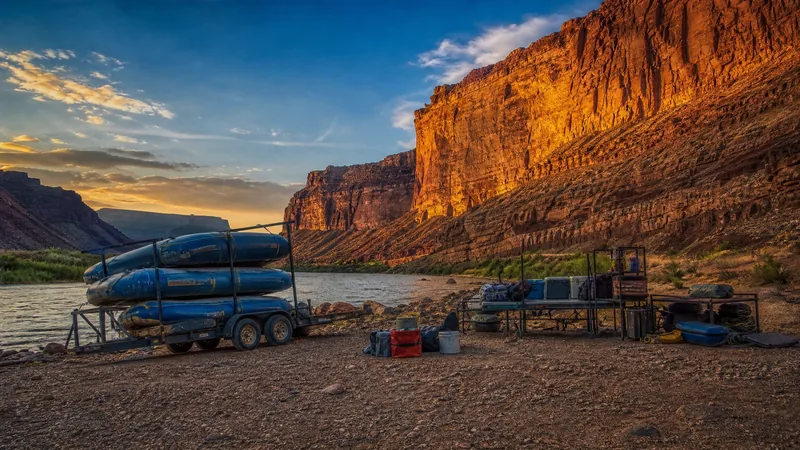
How to Start an Outfitter or Guide Business in Utah: State Parks Registration and Federal Land Permits
How to Start an Outfitter or Guide Business in Utah: State Parks Registration and Federal Land Permits
If you plan to take paying clients onto Utah's rivers, lakes, or public land, you will likely search for a utah outfitter license early on. The honest answer is that Utah does not issue one general outfitter license. What you need depends on what you do and where you do it. A company that runs boats on the water, guides hunters or anglers, or leads trips on federal ground answers to different agencies, and one operation can require several registrations.
This guide covers the order we would follow when forming a guide company from scratch: confirm your activities, form the entity, get the local license, set up tax accounts, register with the right state agency, and then secure federal land permits. Where a figure is not settled, we say so and tell you which agency to confirm it with.
Informational only. This article is general information, not legal or tax advice. Outfitting involves liability, insurance, and tax decisions that call for a licensed Utah attorney and a CPA. Use this article as a starting map, not a substitute for their advice.
What You Need Before You Start
Gather these items before you open any state or federal form. Most applications ask for the same information more than once, so a single folder saves time.
- An entity name checked against state records, plus a decision between an LLC and a corporation. Most small guide companies form an LLC.
- A Utah street address for your registered agent. A PO box may be listed only in addition to a street address.
- A written list of activities: boat trips, hunting, fishing, and any land tours on public ground.
- A roster of company agents, meaning every guide, boat operator, or employee who supervises a vessel or leads people on one.
- A certificate of general liability insurance you can hand to the state.
- A trip plan for each public-land area you intend to use, since trip authorizations and special use permits are tied to specific places.
- A budget that covers state filing fees, a city or county business license, and federal permit fees.
Step 1: Match Each Activity to the Right Agency
Utah does not have a Division of Outfitters. The registration you need depends on the activity, so sort your services before you file anything. Use this table as your map.
| Activity | Agency | What It Covers |
|---|---|---|
| Charging to provide boats, supervise a vessel operator, or lead people on a vessel | Utah State Parks, Division of Recreation (commercial boating) | Annual registration under rule R650-206 |
| Hunting guide services | Utah Department of Natural Resources, Division of Wildlife Resources (DWR) | Check current rules with DWR because of recent legislation |
| Fishing guide services on boats | Utah State Parks and DWR | Boat-based fishing guides also register with DWR |
| Trips on BLM, Forest Service, or other federal land | Bureau of Land Management, U.S. Forest Service, National Park Service | Special recreation or special use permits; allocations are limited |
| Services inside a national park | National Park Service | Concessions are a separate federal process |
Many river operators touch at least two rows. A company that runs raft trips on federal land will usually need the State Parks registration and a federal permit. Confirm each row against the agency's current rules, not against this table alone.
Step 2: Check Your Name and Reserve It if Needed
Start with the Utah Division of Corporations and Commercial Code, part of the Utah Department of Commerce. Search existing records at businessregistration.utah.gov before you commit to a name.
An LLC name must contain "limited liability company," "limited company," "L.L.C.," "LLC," "L.C.," or "LC." "Limited" may be abbreviated as "Ltd." and "company" as "Co." The name must be distinguishable from existing entity, reserved, registered, and assumed names on Division records. It also may not suggest that your company is a state agency or political subdivision. That last rule matters for outfitters. A name that sounds like a state park or wildlife agency can be rejected even when no one else uses it.
If you need time to finish paperwork, you can reserve the name for 120 days for $22. Reservation is a separate step from forming the entity.
Step 3: File the Certificate of Organization
The formation document for an LLC is the Certificate of Organization, and the filing fee is $59. File through the Utah Business Registration System at businessregistration.utah.gov, logging in with UtahID. Most online filings are processed and approved instantly. Filings that need manual review are stated as 2 to 4 business days from receipt, and the Division has posted current processing times of 7 to 10 business days during backlogs. Expedited processing is $75 per filing under the Division's Fiscal Year 2026 fee schedule.
If you form a corporation instead, the document is Articles of Incorporation for a domestic business corporation, and the filing fee is also $59. Most guide companies choose an LLC because it is taxed by default as a partnership or sole proprietorship, with income passed through to members. Make that choice with a CPA, not from a checklist.
Step 4: Appoint a Registered Agent
Every registered entity must name a registered agent for service of process, and the agent needs a Utah street address. The agent can be an individual, a business registered with the Division and in good standing, or a commercial registered agent. Naming an agent is your affirmation that the agent has agreed to serve. A commercial registered agent registration costs $52.
Many owners name themselves when they have a fixed Utah street address and are in the office during business hours. A guide who spends most of the summer on the water may prefer a commercial agent, so court papers reach someone who can act on them quickly. That is a cost and convenience tradeoff, and the choice is yours.
Step 5: Register a Trade Name if You Need One
If your legal name is "Canyon Ridge Outdoors LLC" but you want to market the company as "Canyon Ridge Guides," you need an assumed name (DBA) registration. Utah files this at the state level, not the county. The registration goes to the Division of Corporations and Commercial Code. The fee is $22 to register for a three-year term, and the renewal fee is shown on the Division portal. Forms and instructions are at commerce.utah.gov/corporations/business-entities/dba.
Step 6: Get Your City or County Business License
Utah issues no statewide general business license. After you register with the Division, you need a business license from the city, town, or county where your business is located or operating. Inside city limits, that is the city. Outside them, it is the county. A license from one city does not transfer to another, so if your office is in one town and your put-in is in another, ask both jurisdictions.
Fees, inspections, and land-use approvals vary by jurisdiction. Call the city or county clerk and confirm the fee, any zoning limits on commercial use of a site, and whether your activity needs an occupational license from the Division of Professional Licensing (DOPL). Do not assume a neighboring town's answer applies to yours.
Step 7: Set Up Your Tax Accounts
A seller with an established presence in Utah needs a Utah Sales Tax License from the Utah State Tax Commission. Apply through TAP at tap.tax.utah.gov. The state sales tax rate is 4.85%, and combined state and local rates run from 6.35% to 9.55% depending on jurisdiction (up to 10.05% in some special districts). Whether your trip fees, equipment rentals, or meals are taxable, and at what rate, is a question for the Tax Commission and your CPA. Do not assume the answer.
On income tax, an LLC's income passes through to members and is taxed at Utah's flat 4.45% individual rate (2026). An LLC that elects corporate treatment pays the 4.45% corporate franchise and income tax with a $100 minimum tax. Your Utah Tax Commission guidance is at tax.utah.gov.
Step 8: Register for Commercial Boating With Utah State Parks
This is the registration most river and lake operators miss. The Utah State Parks Division of Recreation requires annual registration for any business that charges to provide boats, supervise a vessel operator, or lead people on a vessel. The governing rule is R650-206. Your application must include:
- A business license from your city or county (Step 6)
- Proof of general liability insurance
- A list of company agents
- Trip authorization or special use permits for any public land you use
- The registration fee
Registration expires each December 31, so you file every year. A 2015 rule amendment listed $150 for an in-state company. That is an older figure, and we have not verified it as the current fee. Confirm the current amount with Utah State Parks before you budget, and find the commercial boating page on the State Parks agency website.
Step 9: Check DWR Requirements for Hunting and Fishing Guides
Hunting guide services sit under the Department of Natural Resources and its Division of Wildlife Resources. Fishing guides who operate on boats also register with DWR, in addition to the State Parks registration. Recent legislation has changed some requirements, so check current rules with DWR before you sell a hunt or a fishing trip. Do not rely on a forum post or an older guide's account of what the rules required last year.
Step 10: Secure Federal Land Permits
If your trips go onto federal ground, you need authorization from the land manager. Three agencies handle most of this work:
- Bureau of Land Management (BLM): Special recreation permits. A minimum use fee of $115 plus 3% of gross revenue has been reported for BLM permits. Treat that as a starting point and confirm it with the BLM field office that manages your area, because fee structures and minimums can change.
- U.S. Forest Service: Special use permits for commercial use of national forest land.
- National Park Service: Special recreation permits for some activities. Commercial services inside national parks run through a separate concession process, so do not assume a standard permit covers them.
Allocations are limited for popular routes and put-ins, and the earliest applicants often get the best dates. Apply before you book clients, and do not advertise a trip until your authorization is in hand.
Common Mistakes to Avoid
- Assuming one outfitter license covers everything. Each activity can add its own registration.
- Filing your assumed name with the county. Utah's DBA registration goes to the state Division.
- Using a city license in a different city. Licenses do not transfer between cities.
- Missing the renewal window. The LLC annual renewal window opens 60 days before your anniversary date. The renewal fee is $18, and a late renewal adds a $10 fee.
- Letting insurance lapse. State registration requires proof of general liability insurance, and a gap can stop your season.
- Leaving staff off the company agent list. Anyone who supervises a vessel or leads people on one should be listed.
- Booking trips before permits clear. A trip sold before your authorization arrives can force you to cancel with paying clients.
- Trusting old fee figures. The $150 State Parks figure dates from a 2015 amendment. Confirm every fee with the agency before you file.
What to Expect Once You Are Registered
Results will vary with your activities, your jurisdictions, and how quickly agencies respond. If nothing is flagged for manual review, the entity filing can often move quickly. The local license and state boating registration may take longer, depending on each office's workload and what documents they request.
With the state and local steps complete, you may be able to run paid boating trips on state waters once State Parks approves your registration. Federal trips depend on permit allocation, which can delay your first season. Expect the first year to be heavy on paperwork and insurance, and plan your cash flow around that timeline.
Next Steps and Where to Get Help
Work through the steps in order: entity, registered agent, city or county license, tax accounts, State Parks, DWR, then federal permits. Confirm every fee on the agency page before you file, since figures in this article may have changed.
For planning help, the Utah Small Business Development Center offers advising at utahsbdc.org, and the U.S. Small Business Administration's Utah district office is at sba.gov/district/utah. For insurance, contracts, and tax structure, work with a Utah attorney and a CPA who have served outdoor businesses. This article is informational, not legal or tax advice.
Keep exploring: related Utah guides
- How to Start a Vacation Rental Business in Utah
- How to Start a Film Production Company in Utah
- How to Start a Nightly Rental Business in Park City
- How to Start a Nightly Rental Business in Moab
- How to Start an LLC in Utah
- Utah Business License
- How Much Does It Cost to Start a Business in Utah
- All Utah business types
- Every Utah guide in one place